What buyers should take away first
The November packaging innovation cycle points in one direction: brands are being asked to prove they are using less virgin material, and they are doing it through incremental material swaps rather than wholesale redesigns. For anyone specifying labels, that means the substrate underneath the label is changing more often than the label itself — and the reusable packaging system conversation is now sitting alongside filler content and recycled resin as part of the same procurement brief.
Two examples in the extract illustrate the pattern. Neither is a dramatic material shift. Both are measured reductions that depend on the rest of the pack — closures, dispensing components, decoration and labels — still performing to the same tolerances.
Hazelnut shells displace virgin PP in beauty components
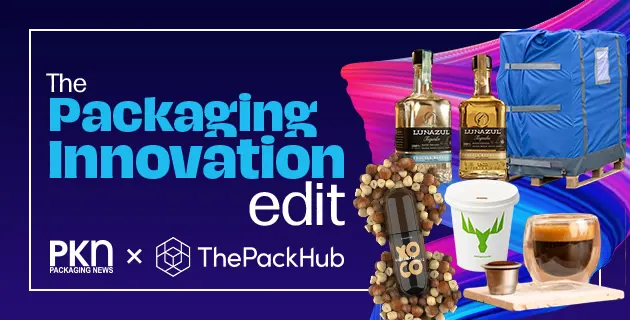
Berlin Packaging has developed XOCO, a polypropylene (PP) compound that incorporates hazelnut-shell residue from the food industry into precision-moulded beauty packaging components. The material was developed with Krill Design and can contain up to 10 per cent shell filler, displacing a proportion of virgin polymer.
The stated aim is to retain the torque resistance, snap-fit reliability and formulation compatibility expected of conventional PP. The compound has been tested through injection moulding and injection blow moulding for a 30ml bottle, a 45mm cover and a dropper. Potential applications extend to pump covers, collars and caps for skincare, cosmetics and fragrance packaging.
Designers can leave the hazelnut particles visible as a distinctive finish or conceal them within the component. Berlin Packaging says XOCO is compatible with established PP recycling streams where appropriate collection, sorting and processing facilities are available.
ThePackHub's Paul Jenkins characterised the approach as a clever way to bring a waste stream into beauty packaging without redesigning the whole component, noting that the 10 per cent ceiling makes this a measured reduction in virgin PP rather than a dramatic material shift. He also suggested the visible particles could become part of the appeal.
For beauty brands, the opportunity identified in the source is to specify lower-virgin-content components without sacrificing the tolerances required for dispensing and closure systems. The source also cautions that compatibility with PP recycling processes should not be confused with guaranteed recovery: acceptance of filled polymers will need to be established in relevant markets.
Lightweighting and PCR in spirits bottles
US spirits producer Heaven Hill has introduced two changes to its 50ml plastic bottles as part of a programme to reduce virgin plastic consumption and associated emissions. At its Bardstown, Kentucky, bottling plant, the company introduced its first deliberately lightweighted 50ml bottle on the K-Line production line. The extract indicates the design is used across several applications, though the detail beyond that point is truncated.
Even in outline, the move is consistent with the beauty example: the virgin-material reduction is achieved by taking mass out of the container or substituting a fraction of the resin, not by changing the format of the pack.
What this means for label specification
Our own reading of this market, offered as general industry analysis rather than a comment on any named company's programme:
Decoration must survive a moving substrate. When a moulded component contains up to 10 per cent agricultural filler, surface energy and texture can vary from a neat PP part. Adhesive selection should be confirmed against the actual filled compound, not against a generic PP data sheet, particularly where the label wraps a curved 30ml bottle or a small closure.
Small formats are the hard cases. The 50ml spirits bottle and the 30ml beauty bottle are the formats where lightweighting bites first, because the ratio of label area to container mass is highest. Thinner walls and lighter bottles place more demands on application tolerance and on how the label behaves through filling and transport.
End-of-life claims need to match the stream. A filled polymer that is described as compatible with PP recycling still depends on collection, sorting and processing being available. Labels, adhesives and inks sit in that same conversation. Where a pack is designed for return and refill — the logic behind any reusable packaging system — the label has to withstand repeated wash cycles rather than simply survive one trip, which pushes specification toward wash-off adhesives and durable face materials.
Regulatory pressure is arriving through material disclosure. The extract does not cite specific regulations, but the direction of travel is clear from how these innovations are being presented: filler content, recycled content and recyclability are now marketing claims that must be substantiated. Label buyers should expect to be asked what is in the adhesive and the face stock, not only what is printed on them.
The practical conclusion for export-facing converters and brands is unglamorous. The virgin-material savings in this cycle are single-digit percentages achieved through careful engineering. Labels and adhesives that behave predictably on those engineered substrates are what allow the savings to reach the shelf.
Source: packagingnews.com.au