Eco in Pack leads the way in reusing wine bottles, cutting costs and emissions
A new bottle-washing facility in south-west France is paving the way for wine and spirit bottles to be reused instead of recycled.
Recycling glass is expensive – it must be crushed to a powder and then heated at 1,200C for 24 hours before it can be used.
The idea of the company called Eco in Pack, based in Cognac, is to reuse bottles so the overall carbon footprint of each one is reduced.
“We estimate that bottles can be used at least 10 times, which if it happens means the carbon footprint of a bottle of wine is greatly reduced,” co-founder Martin Calmettes told The Connexion.
“A glass bottle represents 80% of the carbon footprint of a bottle of wine.”
Some companies such as Coca-Cola, which has deposit systems for glass bottles in cafés, use bottles up to 50 times.
New 750ml bottles in France typically cost winemakers between 30 - 75 cents, depending on energy prices at the time. By contrast, the Eco in Pack washed bottles cost between 20 - 25 cents.
Verallia, Europe’s biggest glass maker, has had a bottle manufacturing factory in Cognac for 60 years, and last year switched from gas furnaces to electric to reduce its carbon footprint.
It produces 10,000 bottles a day, while the bottle-washing factory set up by Eco in Pack produces 7,000 bottles a week.
“Overall, people buy 4.5 billion bottles a year in France, including glass jars and fruit juices, so we are only scratching the surface,” said Mr Calmettes.
“But the systems and expertise we develop here can be duplicated elsewhere. The idea is to have similar units close to all the major wine areas so the costs of transport are also reduced.”
The company has shown its operation to members of the Inno’Vin association, which encourages research and development in the sector.
Mr Calmettes said high-value, more expensive bottles, such as those used for sparkling wines and ciders, were favoured.
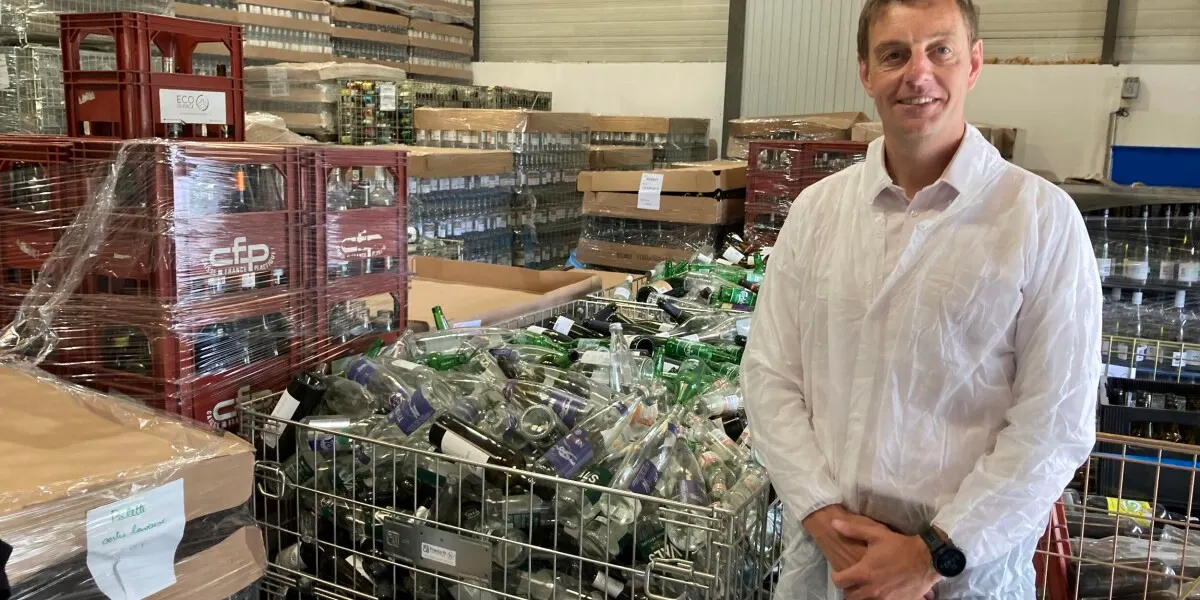
The company sources its bottles in three main ways: from winemakers or co-operatives who have waste bottles, from event organisers, and from a network of cafés and restaurants who would otherwise have to pay to dispose of them.
Some bottles come from associations employing people with additional needs, or those getting back into the job market, who sort rubbish and put aside good bottles.
Very few of the bottles come from the consigne (deposit) system the government is trying to introduce for all French supermarkets, with trials running in the four regions of north-west France.
“Getting bottles from the supermarkets is…
Source: The Connexion