
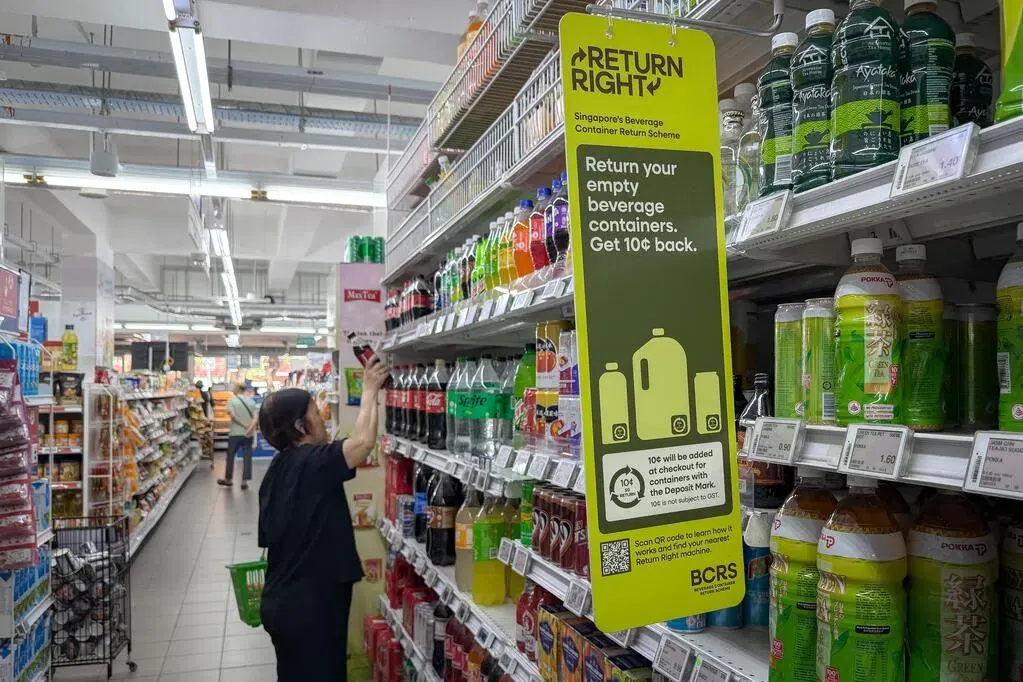
Singapore's packaging waste rules may be about to widen well past drink bottles, and that has direct consequences for anyone shipping consumer goods into the market. On 25 November, the Singapore Environment Council released a report titled Beyond BCRS: A Roadmap for Comprehensive Packaging Responsibility, proposing that the city-state extend its Extended Producer Responsibility (EPR) framework to cover all packaging materials across all industries — not just beverage containers.
The council framed the report around the goals of Singapore's Zero Waste Masterplan. Its core argument is simple: the Beverage Container Return Scheme (BCRS), launched in April this year, was an important milestone, but the vast majority of packaging still sits outside the regulatory net. That gap is what the roadmap sets out to close.
What the Council Is Proposing
The report envisages a framework covering plastic, paper, cardboard, glass and metal packaging. Beyond lifting material recycling rates, the council argues an expanded scheme would discourage excessive packaging and push brands toward materials with a lower environmental impact.
Four main recommendations anchor the roadmap:
- Bring more packaging materials and industries into the EPR framework, with collection channels tailored to each material's characteristics and recycling requirements to reduce contamination and improve recovery rates.
- Establish multiple complementary channels for collecting packaging waste rather than relying on a single stream.
- Introduce "eco-modulated fees" that charge packaging producers and importers according to their environmental impact.
- Strengthen public-private partnerships to support the system.
The fee mechanism is the part worth watching. Unlike the deposit-refund model used by the BCRS, eco-modulated fees are levied on producers and importers. Companies that place large volumes of packaging on the market, or that use less sustainable materials, could pay more. The stated intent is to encourage businesses to cut unnecessary packaging and improve design, while generating funding for collection and recycling. The council notes that similar mechanisms already operate in some European countries and the US.
The BCRS itself marked the first expansion of Singapore's EPR framework since it began regulating electronics recycling in 2021 — a useful signal of how the regulator builds outward, scheme by scheme.
Why Label Buyers Should Care
For export buyers, the significance is not confined to Singapore. A deposit return scheme packaging framework that graduates into broad, fee-based producer responsibility sets a template that other Asian markets may study, and it shifts cost and design pressure upstream — toward the brand owner, and from there to every component of the pack, including the label.
Once fees are modulated by environmental impact, the label stops being decorative and becomes part of the assessed footprint. That raises practical questions at the specification stage: whether a pressure-sensitive adhesive interferes with a PET or HDPE recycling stream, whether a wash-off label can be cleanly separated in a wash line so the container is recovered at higher quality, and whether a water-soluble label is appropriate where the pack itself is designed to dissolve or disperse. None of these are abstract concerns under a fee model that rewards lower-impact material choices.
Our Reading of the Direction of Travel
As a general industry observation, the shift from container-only schemes to all-material responsibility suggests buyers should start auditing label construction against recyclability now, rather than after fees arrive. Where a pack is built around a return or refill loop, wash-off performance and adhesive residue become commercial variables, not just technical ones. Where mono-material packaging is the goal, a compatible label substrate and adhesive help keep the pack inside a single recycling stream.
The report's recommendations remain proposals, and the extract does not set out a timeline beyond noting short-term measures. But the direction is clear: packaging regulation is moving from the container to the whole pack, and the label sits inside that boundary.
Source: 联合早报