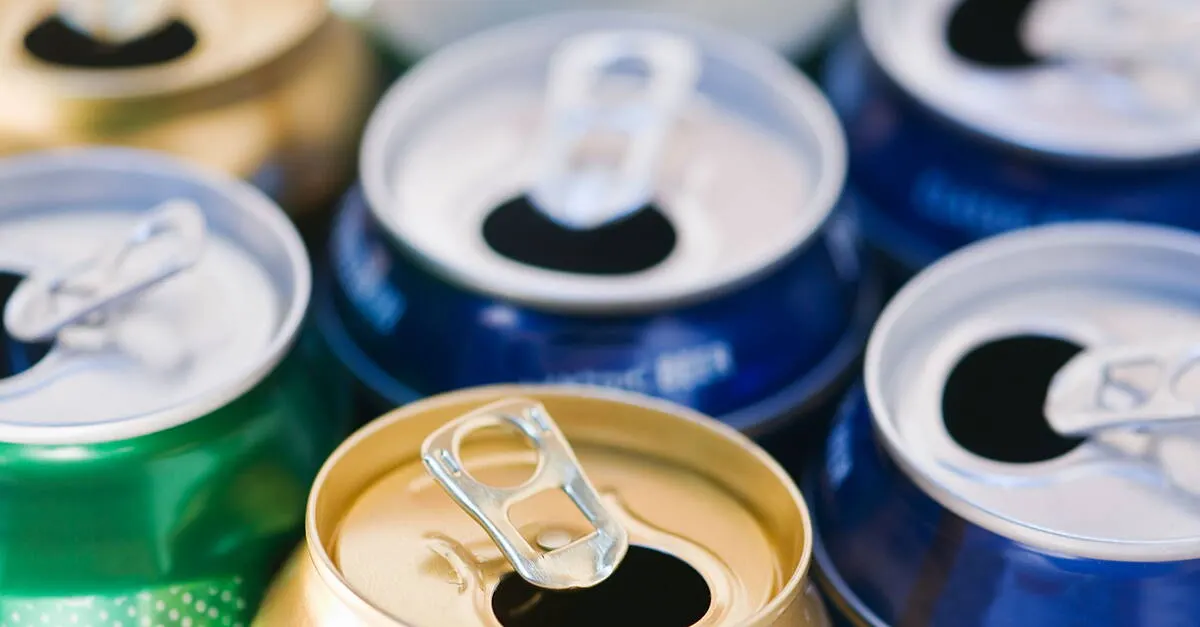
Greece has started building a national deposit return scheme packaging system for single-use plastic bottles and aluminium beverage cans up to three litres, a development that matters to anyone shipping labelled drinks packaging into the Greek market. The non-profit operator, DRS Hellas, was licensed by the Hellenic Recycling Agency in early November and will run the programme on a not-for-profit basis, reinvesting operational revenues into collection hardware, tracking systems, logistics and public awareness campaigns.
The framework follows models already active in 19 European countries and is designed to close the loop from collection through sorting and recycling back to raw material for new containers. For exporters, the practical signal is that packaging placed on the Greek market will increasingly be judged on how well it moves through a return-and-recycling stream, not just on how it performs on the shelf.
Deposit Levels and What Is Excluded
Shoppers will pay a deposit at checkout of €0.10 for containers up to 0.5 litres and €0.15 for larger formats between 0.5 and three litres. When they return empties to authorised collection sites, they receive a receipt for the full deposit value, redeemable against future store purchases.
Several categories sit outside the scheme. Glass bottles are excluded, as are paper and composite cartons such as Tetra Pak, unlabelled containers, and packaging for wine, alcoholic spirits and dairy products. The explicit exclusion of unlabelled containers is worth noting: label presence is treated as part of what makes a container identifiable and returnable within the system.
Collection Network Built for Islands and Peak Season
DRS Hellas plans a nationwide network of 8,700 collection points by the time the system reaches full operation in 2027. The geography is deliberately accounted for — Greece's fragmented island structure and seasonal tourism surges shape where those points go. Collection infrastructure will sit inside supermarkets, select retail stores, public areas and major tourist hubs, using both automated reverse vending machines and manual drop-off counters.
Organisers expect 65% of the physical infrastructure to be operational on launch day. That sits ahead of a mandatory separate collection target of at least 90% from 2029 onward. The gap between launch coverage and the 2029 threshold implies several years of network expansion, with collection points added across islands and lower-volume retail as the system matures.
Producer, Retailer and Foodservice Coordination
DRS Hellas will coordinate producers, retailers and the foodservice industry to keep packaging materials circulating within the domestic production cycle and to cut environmental waste. Because the operator is non-profit and reinvests revenues into the system itself, the incentive structure differs from a commercial collection arrangement: throughput and material quality matter more than margin per collection point.
What This Means for Label Specification
Our reading of the market, as a label manufacturer, is that deposit return scheme packaging requirements tend to reach label specification eventually, even when labels are not the stated subject of the regulation.
First, the exclusion of unlabelled containers reinforces that a label is an identifiable component of a returnable container. Buyers supplying the Greek market should confirm that label presence and legibility survive whatever handling the container sees before it reaches a reverse vending machine or manual counter.
Second, recycling-line compatibility is the pressure point. Where containers are collected, sorted and processed back into raw material, adhesives and facestocks that interfere with washing or sorting become a commercial risk rather than a technical footnote. Wash-off adhesive systems and water-soluble label constructions exist precisely for containers that re-enter a wash or recycling stream, and the choice between permanent, removable and wash-off adhesive should follow the end-of-life route of the container, not only the filling line.
Third, the 90% separate collection target from 2029 sets a direction of travel. Markets that adopt deposit systems rarely loosen requirements later, and neighbouring European jurisdictions modelling their own schemes on the 19 already active will watch how Greece's network performs. For exporters, specifying labels that behave predictably in collection and recycling streams is a low-cost way to stay ahead of that curve.
The immediate action for buyers is unglamorous: check whether the containers you ship into Greece fall inside the deposit scope, confirm label and adhesive choices against the intended recycling route, and keep specification records ready as the network expands toward 2027.
Source: ESM Magazine