A research team has published work on a biodegradable active packaging film that combines a visible-light-responsive photosensitizer with a plant polyphenol, and the results are worth attention from anyone specifying food-contact packaging. For buyers already tracking the dissolvable packaging film category, the study offers a concrete formulation path rather than a purely conceptual claim: the film was tested on real produce, against real polyethylene wrap.
What the researchers built
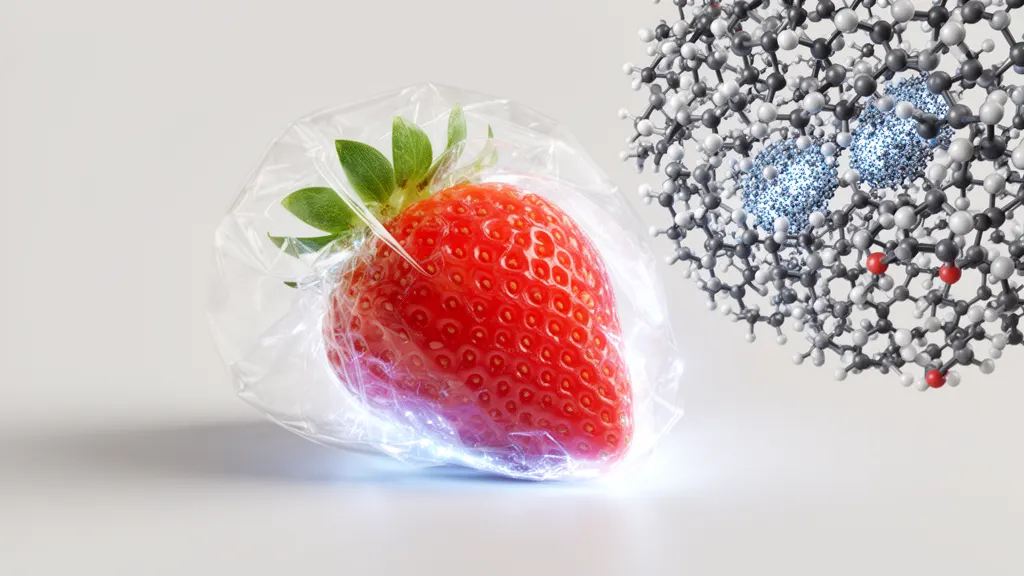
The team, led by Jiayi Hu, integrated erythrosine B — a photosensitizer that reacts to visible light — and tannic acid, a plant polyphenol, into a matrix of bio-based poly(vinyl alcohol) and chitosan. The logic is two-sided: light-triggered photodynamic inactivation attacks microbial colonization, while the polyphenols supply a natural biochemical defense. In storage trials, whole strawberries were held at ambient room temperature and fresh-cut watermelon slices were kept under refrigeration. Compared with conventional polyethylene wraps, the active film extended freshness, limited moisture soaking and prevented softening.
Why the matrix matters
Chitosan, a natural linear cationic polysaccharide derived from deacetylated chitin, brings recognized biocompatibility, biodegradability and intrinsic nontoxicity to the blend. On its own, however, neat chitosan films are excessively brittle because of rigid interchain hydrogen bonds, and they swell heavily in humid storage atmospheres. Blending in water-soluble poly(vinyl alcohol) addresses those physical deficits. That detail is the practical core of the paper: the functional additives get the headlines, but the polymer blend is what makes a workable film.
The problem the film is aimed at
The motivation is postharvest loss. Freshly harvested fruits and vegetables remain metabolically active tissues that respire and transpire continuously, consuming internal carbohydrate reserves and shedding cellular water through storage and transit. Weak cold-chain infrastructure makes this worse. The extract cites global food spoilage rates estimated between twenty and fifty percent. Conventional non-biodegradable plastics also tend to create enclosed, hyper-humid microenvironments where trapped condensation accelerates fungal and bacterial growth — and the packaging itself persists in the environment after use. Any dissolvable packaging film entering this space is being judged on both counts: does it slow decay, and does it stop being waste.
What this means for label specification
For label and packaging buyers, the immediate relevance is not that this particular film is ready for a production line — the extract describes a research-stage formulation, and no commercial availability, certification or pricing is reported. What it does signal is direction. If active bio-based films move toward commercial produce packaging, the label stock laminated to them will face the same pressures the film does: moisture exposure in humid cold-chain conditions, food-contact compliance, and end-of-life compatibility with whatever the film is designed to do. A wash-off or dissolvable label only delivers its promise if the adhesive releases cleanly under the same conditions that dissolve the carrier, and if the residue does not contaminate a recycling or composting stream. Specifiers should also expect questions about light exposure, since this film's antimicrobial action depends on visible light reaching the surface.
The study is best read as a functional blueprint for postharvest packaging rather than a procurement decision. But the dissolvable packaging film conversation is clearly moving from material science toward supply-chain reality, and label specifications will need to move with it.
Source: bioengineer.org