Tosca has used its 2026 Sustainability Report to make a case that buyers of transport packaging rarely hear in a purchasing meeting: that the crate or tote carrying a product deserves to be assessed like the conveyor and the forklift beside it, not like a consumable bought at the lowest unit price.
The global reusable packaging and pooling specialist argues that as food supply chains become more automated and face mounting cost and regulatory pressure, packaging decisions increasingly shape operational performance. The report frames a reusable packaging system as a strategic component of supply chain infrastructure rather than a purchased commodity.
What the Report Measures
The company quantifies several benefits across customer operations. Rigid crates protect fresh produce during handling and transport, reducing damage by an average of 6-9%, while for eggs the company reports damage reductions of more than 50%. On labour, retail-ready reusable packaging is credited with saving 307 labour hours per 100,000 crates compared with corrugated packaging. Better load utilisation and fewer journeys can cut transportation costs by up to 25%, with associated emission reductions.
On waste, Tosca says its reusable packaging solutions have removed 2.229 million metric tonnes of corrugated packaging from supply chains, eliminating the associated recycling and disposal requirements.
CEO Eric Frank put the argument directly: companies invest significant resources in optimising equipment, labour and transportation, yet packaging is still too often evaluated primarily on unit price. That approach, he said, overlooks its role in keeping automated lines running, protecting products and moving goods efficiently. Packaging is an operational input, he added, and should be evaluated with the same discipline as the infrastructure around it.
Progress Inside Tosca's Own Operations
The report also documents the company's internal footprint. Tosca reports a 30% reduction in global Scope 1 and 2 GHG emissions intensity per operating hour since 2021, and 46% of global electricity sourced from renewables in 2025, up from 33% in 2022. Total waste generated fell 41% compared with 2024.
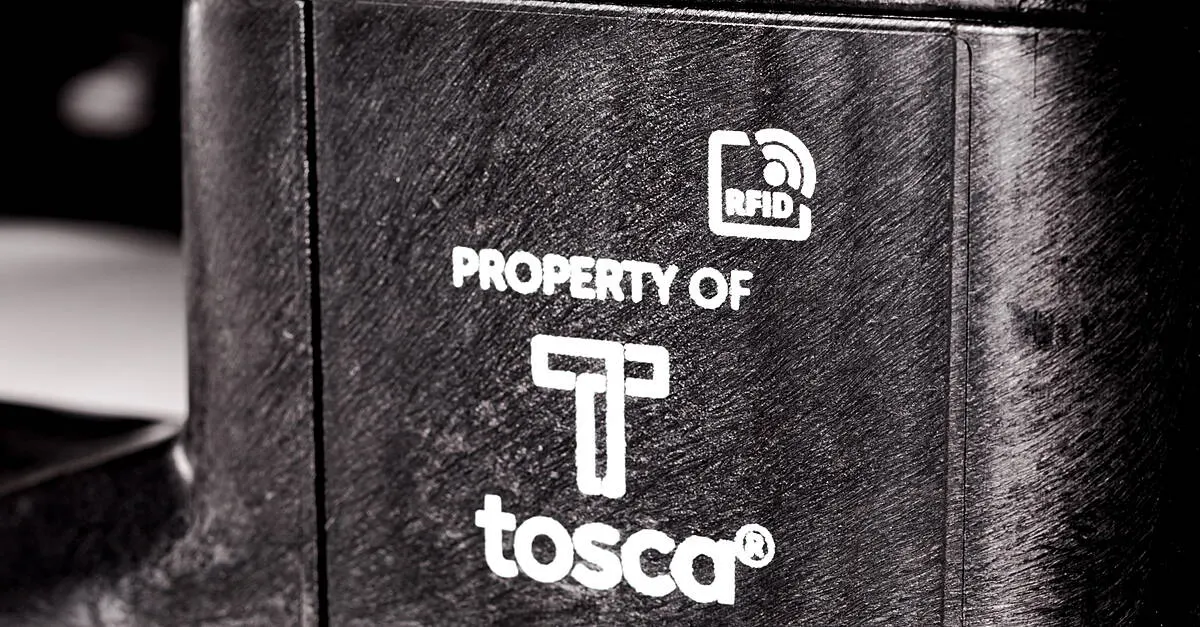
On circular infrastructure, the report highlights the CP 1208 Circular Pallet, developed from 100% recycled plastic, and expanded RFID-enabled asset tracking intended to improve supply chain visibility. The extract also references a first Double materiality assessment without giving further detail.
Why a Reusable Packaging System Changes the Buying Conversation
The numbers matter less as a scoreboard than as a template. Tosca is arguing that packaging should be costed across a cycle — damage avoided, labour saved, journeys removed, disposal avoided — rather than at the point of purchase. For brand owners under pressure to show measurable environmental progress to retail customers, that framing gives them a way to defend a higher upfront price.
The pooling model underneath it also shifts the burden of asset management. Crates and pallets that circulate need tracking, retrieval and repair, which is why RFID investment appears alongside the sustainability claims. A reusable packaging system is only as strong as its return loop.
What This Means for Label Specification
Our own reading, as a converter serving export buyers, is that this argument travels further down the supply chain than it first appears.
When transport packaging moves from single-use corrugated to pooled, returnable assets, the label on that asset stops being disposable. It has to survive washing, handling and repeated cycles, and it has to come off cleanly when the asset is re-branded or retired. That pushes specification toward wash-off adhesives and water-soluble constructions, and away from permanent bonds that leave residue on a crate that is meant to last for years.
There is a second effect. If reusable packaging is to be counted as infrastructure, its components need to be compatible with the recycling and reconditioning lines that keep it in circulation. A label that contaminates a plastic pallet's recycling stream undermines the circular claim the whole report is built on. Buyers auditing a supplier's packaging will eventually ask about the label as well as the crate.
Regulatory pressure reinforces the trend. Where disclosure obligations push brand owners to document packaging mass and end-of-life routes, every component — including the label — becomes part of the accounting. Specifying a dissolvable or wash-off label is a small decision that makes the larger reusable packaging system easier to defend.
Tosca's report is a supplier making its own case, and buyers should read the customer-benefit figures with that in mind. But the underlying shift — from unit price to lifecycle cost — is one label buyers will recognise.
Source: esmmagazine.com