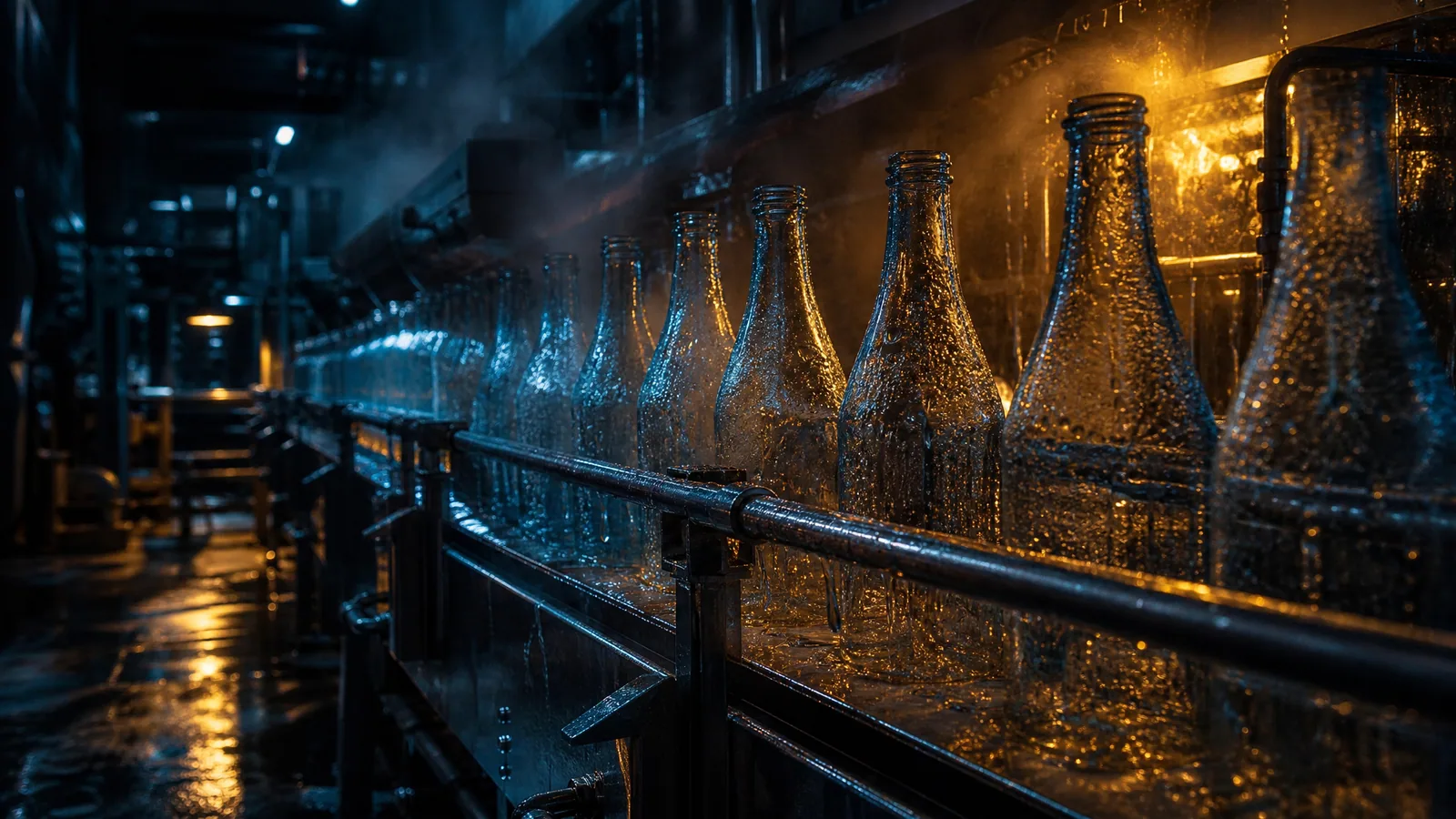
Bottle washers are sized for the worst label they will ever see. If the label pulps, the bath fills with fibre, the caustic is consumed faster, and the filters need attention every shift. If the label releases whole, most of that disappears.
What actually consumes the caustic
Two things: the soil coming off the glass, and the label. A conventional wet-strength paper label breaks up under alkali. The fibre goes into suspension, the ink and adhesive go into solution, and all of it loads the bath. The bath is then dumped earlier than the cleaning duty alone would require, and every dump is fresh caustic, fresh heating and a fresh effluent charge.
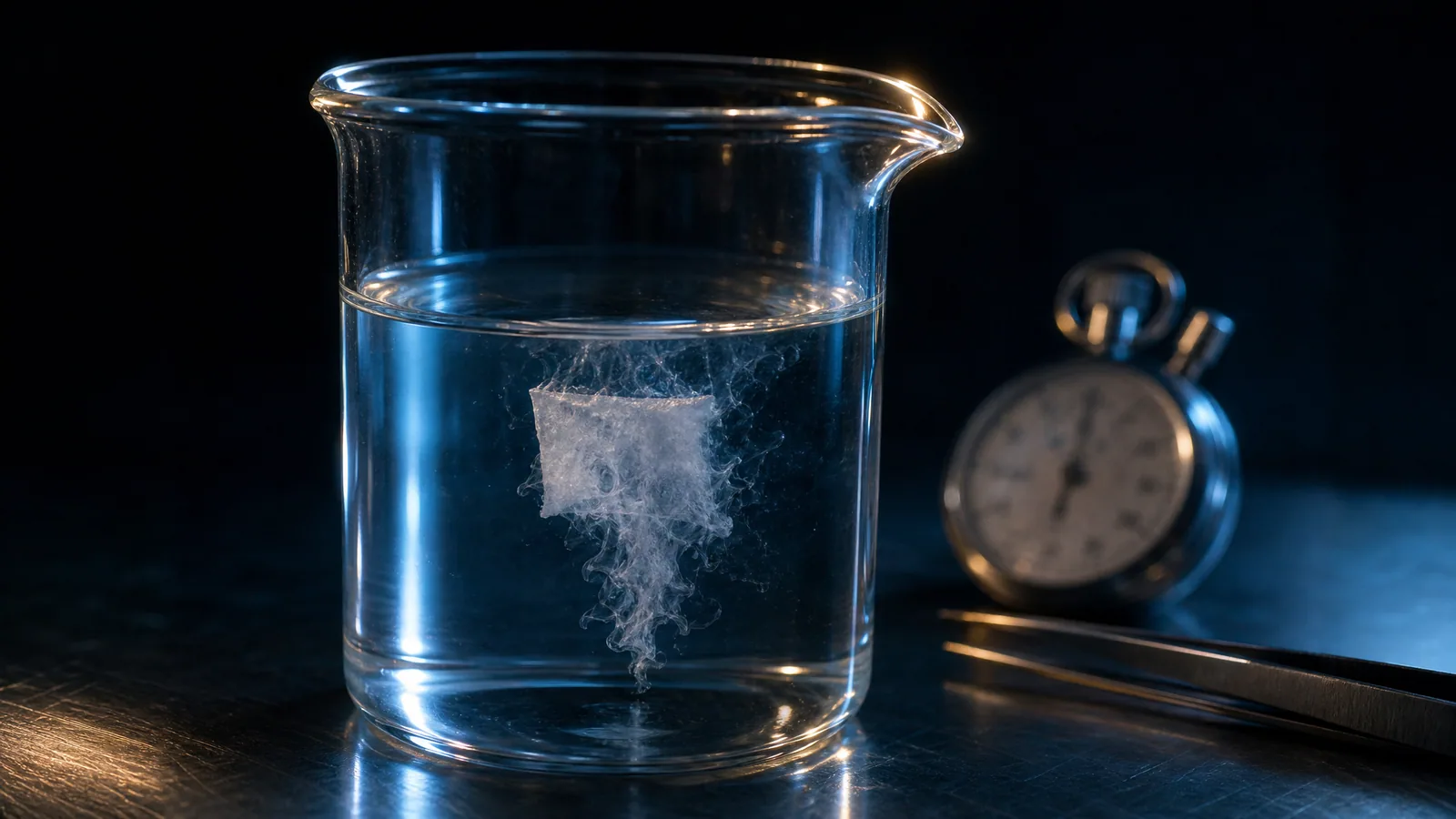
A wash-off construction is designed so that the face stock loses cohesion before the adhesive lets go — the label lifts as one piece, floats, and is caught by the screen. It never enters the chemistry as fibre.
The measurable effects
- Lower caustic concentration. Lines running 3 % for label removal alone can often come back toward 1.5–2 % once the label is no longer the limiting factor.
- Longer bath life. Less suspended solids means the bath is dumped on soil load rather than on fibre load.
- Less filter maintenance. Whole labels are screened mechanically; pulp is not.
- No second pass. Adhesive ghosting is the usual reason a bottle goes round again. A correct wash-off adhesive leaves the glass clean.
Where it goes wrong
Almost every failure is a specification failure, not a material failure:
The window was set too low. The label releases beautifully in the bath and also lifts in the cold room. Ice-water immersion under load for 24 hours is the test that catches this before production does.
The bath is cooler than stated. Nominal 70 °C lines often run 62–65 °C at the label. Measure at the bottle, not at the tank thermostat.
Agitation was not accounted for. A soak-only bath needs a different formulation from a spray-and-carrier washer. Release time can differ by a factor of two.
What to test before you commit
Run the actual construction — printed, varnished, die-cut — at your temperature, your concentration and your agitation, and time it to full release. Then filter the bath and look at the glass under raking light for adhesive ghosting or ink bleed. Those two observations tell you more than any data sheet.